info@detailedge.co
1207 Godrej Waterside, Tower II 12th Floor, West Bengal 700091
Consac offers the most thorough engineering and steel structural design services in the market, including steel detailing, 3D modeling, structural analysis, and drafting. Our dedication to innovation and observance of global industry standards ensures we deliver a wealth of knowledge in a variety of steel types and alloys.
Our structural designers deeply understand various kinds of steel and their alloys, excelling at determining the stress-resistance and load-bearing properties for components like beams, columns, braces, and connections. Their strong grasp of geometric shapes and advanced mathematics ensures robust and precise construction planning.
Knowledgeable with international industry standards, our designers blend innovation and proven techniques. Their aim is to create buildings that are safe, functional, and economical. Designs are specifically developed to withstand internal and external stresses and forces, ensuring durability and resilience in diverse conditions.
We uphold stringent AISC standards and ensure your steel structure detailing is clear, practical, and ready for construction. Partner with us and experience the benefits of precision and dedication.
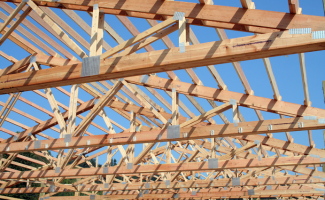
We provided Roof Trusses, Floor Trusses, Wall Panels, and LVL systems for single-family, multi-family, residential, and commercial construction projects.
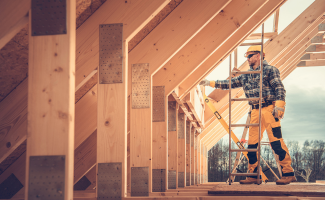
Wood detailing is an important issue in preparing a building for construction. Proper detail planning assists designers greatly in reforming the building, as well as making the production and installation process much easier and neater. In the digital age, such planning is essential to enable the transfer of digital data to digital fabrication machines.
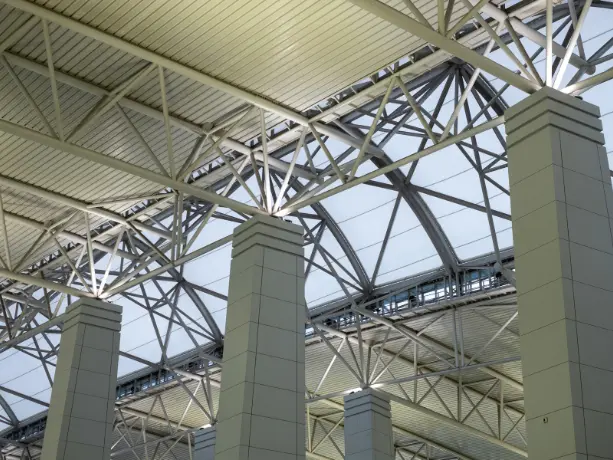
Trusses are a structural system that combines straight short elements grouped as nodes and edges to build a big, triangulated beam structure. These beam systems can support wide spans and heavy loads. It employs a variety of force transfer methods, including compression and tension, to provide the structure the ability to behave similarly to a beam. Trusses are typically used to lift the roofs of large span buildings, and they can also be seen in civil structures, particularly bridges.
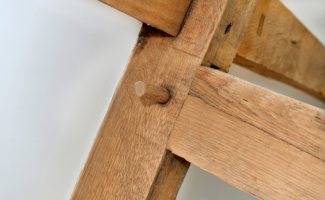
Wood details are used in all construction elements, from roofing to flooring, wall framing to cladding surfaces, thus it is critical to understand how these wood parts interact with other materials at corners, sides, and layers. The most significant aspect is how the wood interacts with other wood components from the same family. In this section, we are experimenting with how wood works in nodes. To clarify, nodes are points where wood members connect at the same origin. The plate method is the safest option, but cutting corners and defining angles is a difficult step, especially when working with remote parameters in design that drive sizes and angles up and down.
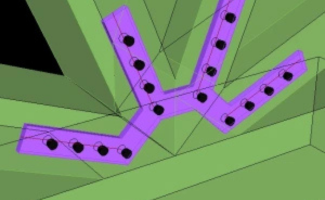
Plates are steel pieces that reinforce connections between wooden parts. Using a number of bolts, and occasionally the angle of the steel plate.
At its best, structural engineering provides a thorough depiction of the dimensions and positioning of structural components, as well as exact structural analysis, design, and implementation.
Our structural engineer working on your project analyses, designs, and evaluates steel and concrete structures using the following criteria:
Cold-formed steel (also known as light gauge steel) is a versatile structural material shaped at room temperature, allowing precise, strong, and lightweight components ideal for modern construction. Unlike hot-formed steel, cold-forming doesn’t require heating the metal, which helps retain its high strength while lowering energy use and production costs.
Applying controlled pressure through hammers or presses to shape steel components with accuracy and durability.
Passing steel sheets through rollers to produce uniform, consistent profiles such as channels, angles, and tubes used in structural framing.
Using dies and punches to cut and shape steel parts precisely, commonly applied for mass production of steel connectors and components.
Cold-formed steel delivers strong structural components that are lightweight, making it easier to handle and install without compromising durability.
The cold-forming process produces parts with tight dimensional tolerances, critical for steel framing systems and building assemblies.
Reduced energy consumption and less waste during manufacturing translate to lower costs for builders and developers.
Used extensively in commercial buildings, residential housing, industrial facilities, and infrastructure projects, especially for steel framing, roof trusses, wall panels, and bracing systems.
There are several methods that can be used for cold forming, including forging, rolling, and stamping. In forging, the material is shaped by applying pressure to it using hammers or presses. In rolling, the material is passed through a series of rollers to shape it. Stamping involves the use of dies and punches to shape the material.
Cold forming has several advantages over hot forming, including the ability to produce parts with high strength and precision, as well as reduced energy consumption and lower production costs. It is commonly used in the manufacturing of a wide range of products, including automotive parts, aircraft components, and construction materials.
At Consac, we specialize in detailed cold-formed steel structural design and drafting that meets international standards. Our experts deliver accurate cold-formed steel detailing, helping you optimize material usage and improve constructability. From light gauge steel framing to complex modular components, our solutions ensure your project achieves structural integrity and compliance.